Trust Forms Faster When Your Team Looks Professional
snaptosuit · August 23, 2026
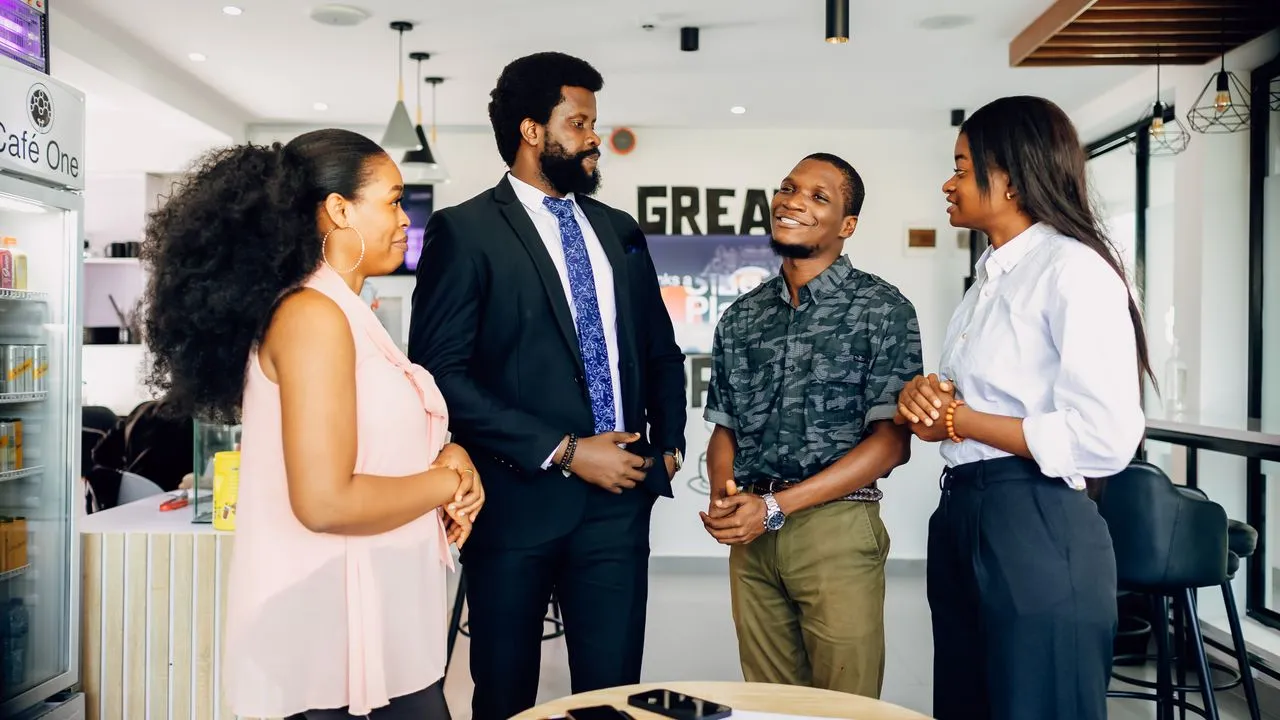
There is a moment none of you controls that nonetheless colours everything after it. A prospect lands on your website, clicks through to the team page, and in the split second before they have read a single word, their mind has already reached a verdict. Does this look serious or thrown together. Are these professionals or a bunch that somehow ended up in the same room. That verdict comes faster than you think, and it almost always comes down to the images.
Trust is not something that builds up piece by piece like a wall. It comes in surges, and the first, biggest surge happens before the actual conversation even begins. Ignore that and you throw away exactly the lead a good first impression hands you. Use it and you have far less to prove in the conversation afterwards, because the underlying attitude is already friendly.
The verdict lands before you say a thing
Picture two doctors, equally smart, equally experienced. One sits in a tidy practice with a clear, calm portrait on the wall. The other smiles at you from a crooked snapshot clearly taken at a barbecue, half a glass of wine still in frame. You know nothing about the professional quality of either. And yet your gut has long decided which one you would rather trust with your health.
That is exactly how the first impression of a team works. Nobody reads the references first. First you look into faces. And those faces send signals without pause, whether you want them to or not. A uniform, cleanly made portrait says, without a single word, that the people at work here pay attention to detail. A random phone photo says the opposite, just as quietly and just as clearly. The viewer does not notice it consciously, they only feel it.
Coherence tells a story of reliability
It gets interesting when you compare a few good individual images with a coherent set of images. A single nice portrait looks pretty. A whole team page, where everyone appears in the same light, against a similar background and in the same visual language, feels instead like a promise. It says that someone here keeps the whole in view. And whoever keeps the whole in view is also trusted to forget nothing on the job.
The effect is surprisingly strong, because it rests on a silent inference. If even their own images are coherent, the viewer thinks unconsciously, then the actual work will probably be careful too. Inconsistent photos trigger the reverse chain. Different formats, sometimes landscape, sometimes portrait, sometimes glaring, sometimes dark, all of it whispers that an ordering hand is missing here. And that doubt quietly transfers onto your offering.
The nice thing is that coherence has nothing to do with expensive high-gloss looks. It is not about perfection, it is about consistency. A team of plain but consistently matched portraits beats a collection of technically better but wildly mixed individual shots by a mile. Because the eye loves patterns and, from a clear pattern, infers a clear mind behind it.
Why trust in strangers is so fragile
Do not forget the position the other person is in. Someone who does not yet know you has no proof whatsoever of your quality. They only have clues. And in that uncertainty the mind clings to anything it can grasp, even to something as seemingly minor as a photo. Trust from strangers is no fortress, it is a tender seedling. A single wrong signal can bend it before it even grows.
That is exactly why images are so powerful here. They are often the first and sometimes the only thing a prospect sees of your people before deciding whether to take the next step. A professional portrait takes away part of the uncertainty. It says, here are real, tangible, credible people, not an anonymous facade. And that noticeably lowers the barrier to making contact at all.
Trust is an advance you earn
In the end it all comes down to one simple thought. Trust is an advance someone gives you before they have proof. You can make that advance easier to grant or harder, and the images of your team are one of the strongest tools for it. Whoever cuts corners here makes it needlessly hard for the other person to take the first step. Whoever is careful here smooths the way.
For a long time this was a question of budget, because a photo shoot for a whole team, kept regularly up to date on top of that, was an effort many simply skipped. Today the bar sits far lower. Modern, studio-free approaches turn plain selfies into uniform, professional portraits, without everyone standing around a studio for an afternoon. That turns the good first impression from a luxury into a given. And the advance of trust you ask of your new contacts shrinks by a good margin.