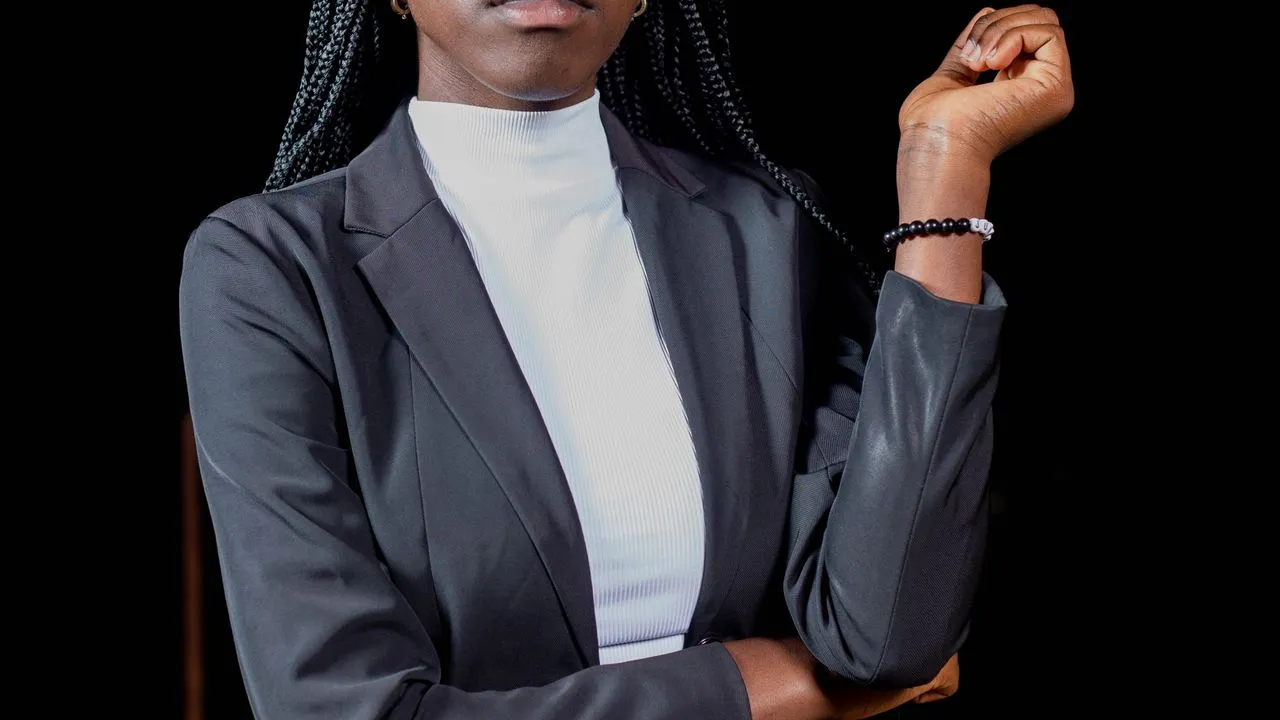
Mismatched Backgrounds Make Teams Look Chaotic at a Glance
snaptosuit · 28 กรกฎาคม 2569

Scroll slowly through a typical team page and deliberately ignore the faces, focusing instead on what lies behind them. Behind one person, a white office wall. Behind the next, a bookshelf in warm light. Then a window with backlight, a houseplant, a slice of kitchen, a washed-out scrap of living room. Fifteen people, fifteen different worlds. And even though each of them smiles pleasantly into the camera, the whole thing feels oddly restless.
That is no accident and no illusion. The background is the most underestimated element of an employee photo. Nobody looks at it consciously, and that is exactly why it works so powerfully. It operates behind the scenes. A consistent background makes a team look like a single unit. A patchwork of mismatched backgrounds makes those same people look as if they merely happen to share an employer.
The eye hunts for the pattern, not the face
Our brain is a pattern machine. When you see a row of images, your gaze automatically searches for what connects them. With consistent portraits it finds that connecting element instantly. Same background, same light, same crop. The eye settles, and attention drifts to where it belongs, namely the people themselves.
When that pattern is missing, the opposite happens. The gaze jumps from one context to the next and finds nothing to hold onto. Each image tells its own little story about the place where it was taken. One person clearly sat in a bright conference room, another in a dark home office, a third somewhere outdoors. These constant changes of scene are tiring, without anyone noticing why. What remains is a vague sense of disorder, and that sense then sticks to the entire company.
The twist here is almost paradoxical. The background is not supposed to matter at all. It is just the surface behind the head. But precisely because it should interest no one, every inconsistency counts double. A good background is one you never notice. A bad one speaks up loudly.
What the background reveals about you
People constantly infer the big from the small. When someone sees a team whose photos all share the same calm background, they think further without realising it. There is clearly a standard here. Something was decided together here. People work in a coordinated way here. That thought never runs in explicit words, but it colours the perception of the whole company.
The mixed-bag of backgrounds sends the reverse message. It whispers that everyone here does their own thing. That there are no shared standards. That nobody coordinated the matter. For a client weighing whether to entrust you with a project, that is a quiet warning sign. If even the photos aren't aligned, what does the actual collaboration look like? Nobody asks that question out loud. It works on them all the same.
I have watched a team completely change how it comes across without reshooting a single face. All that changed was that the wild backgrounds were unified. Suddenly the same crew looked cohesive, professional, of a piece. Nothing about the offering had changed. Only the visual language now told the same story for everyone.
Why remote work makes the problem worse
It used to be simpler. Everyone sat in the same office, and when a photographer came by, the images were taken in the same place, in the same light, against the same wall. The consistent background came about almost on its own. That era is over. Today your people work spread out, some at home, some on the move, some in another country.
With that, the shared location has vanished, and with it the shared background. Anyone who quickly snaps a photo of themselves brings their own surroundings into the frame. The kitchen, the bedroom, the balcony. What was meant as a practical solution produces exactly the patchwork that pulls a team apart. Distributed work has many upsides. For a consistent visual presence, it has become a real challenge.
To make things worse, private backgrounds often reveal more than intended. The drying rack at the edge of the frame, the unmade bed, the clutter on the desk. Details like these don't just distract, they also send a message nobody wants to send in a professional context. The background thus turns from silent servant into involuntary informer.
How to bring calm to your wall of images
The solution starts with a single decision. Define how the background should look for everyone, and stick to it consistently. It doesn't have to be elaborate. A calm, neutral tone works best almost every time, because it pushes the face to the front and nothing else. All that matters is that it is the same for every person. Here, consistency beats even the most creative one-off solution.
Resist the temptation to let everyone choose their favourite background. It sounds like pleasant individuality, but it destroys the very cohesion that is the point. A team doesn't look strong because everyone looks different. It looks strong when everyone visibly belongs together. The background is the connective tissue that makes that belonging visible, often more powerfully than any shared logo.
This is exactly where distributed work was long a dead end. Getting everyone to the same place in front of the same wall is barely feasible anymore. Modern, studio-free approaches resolve this dilemma in an elegant way. They make it possible to convert wildly different source photos into one consistent, calm background, whether someone started in the kitchen, the office, or on the move. That removes the last practical reason to tolerate the chaotic mix of backgrounds. The empty space behind your heads is too important to leave to the luck of the living room.