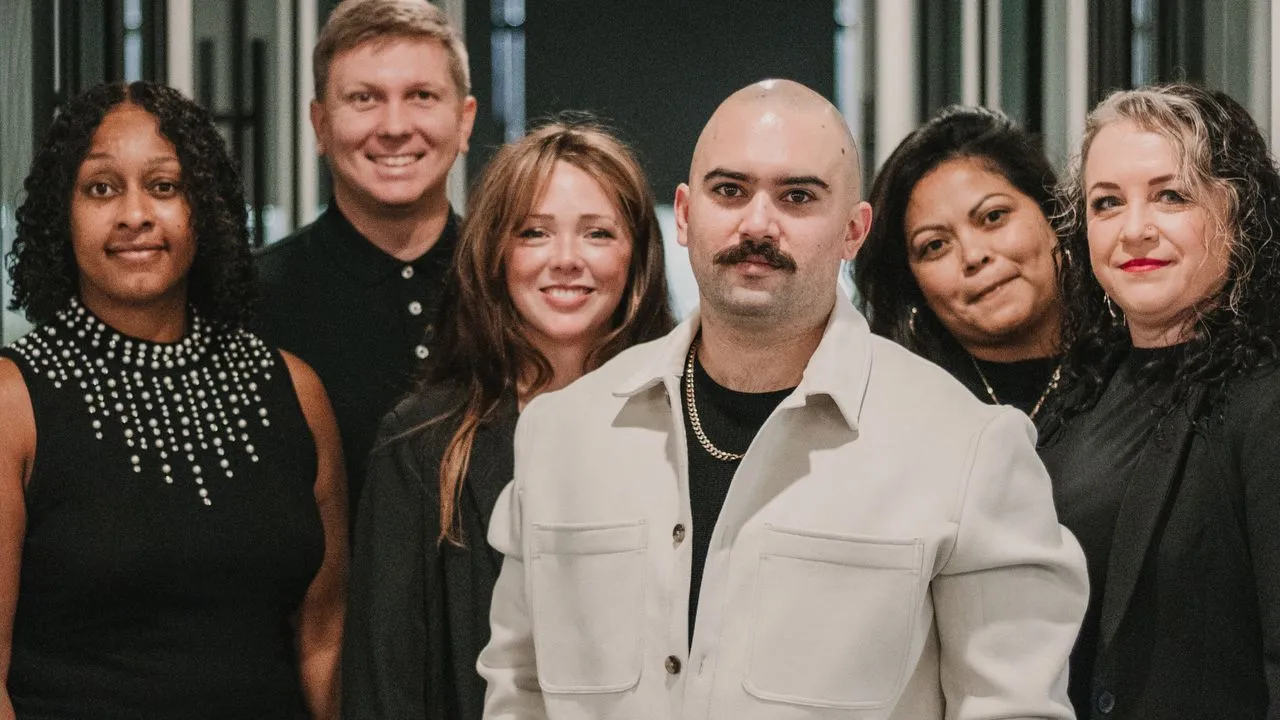
Management Teams: Portraits That Show Leadership
snaptosuit · 1 มิถุนายน 2569

Flip through the leadership page of any company. You see people with folded arms, gaze fixed on the middle distance, a glass facade or a blurry skyline behind them. Everyone wants to radiate the same thing, namely determination, and almost all of them end up looking identical. The problem is not that these pictures are bad. The problem is that they say nothing. They show a pose, not a person.
For a management team that is more expensive than it looks. Your portrait does not hang in a private album. It sits in the annual report, on the podium at the investor conference, in the interview a journalist illustrates, and in the first search result when a potential major client types your name. In all of these moments someone makes a decision about you before you have said a word. Do I trust this person with a tough negotiation. Would I hand them my company. A picture quietly answers that question for you, whether you like it or not.
Authority Is Not the Same as Harshness
The most common mistake with leadership portraits is confusing authority with a tense expression. The narrowed gaze, the emphatically serious face, the slightly downturned corners of the mouth. Many believe this makes you look assertive. In truth it makes you look strained. Real authority has something calm about it. It does not need to threaten, because it is sure of itself. Think of the people in your own career from whom you genuinely accepted leadership. They rarely shouted. They had a presence that needed no show.
That calm is exactly the goal. A leadership portrait that shows authority has an open, direct gaze into the camera and a face that forces nothing. It says I am present, I do not evade, but I also do not need to puff myself up. That is the difference between someone who carries responsibility and someone who has to pretend they could carry it. The first looks composed, the second looks like they are trying. And that difference can be read, in a tenth of a second, by the viewer's brain, long before the conscious mind catches up.
Perspective is part of this too. A camera slightly below can lend stature, but it tips quickly into the domineering. A camera from above shrinks you and makes you look unsure. Eye level is almost always the most honest choice, because it puts you on the same plane as the viewer. You look them in the eye, not down at them and not up to them. That is the stance that creates trust, and trust is the currency leadership is paid in.
A Leadership Team That Does Not Match Looks Divided
Now for the point you barely notice individually, but spot at once as a whole. Executives often have their portraits made separately. One brings a picture from her last employer, the new finance chief one from his time in consulting, the chair a professional photo, but taken against an entirely different background. Each picture on its own is flawless. Side by side on one page they tell an unintended story.
The viewer does not consciously think these photos do not match. They sense something off. Different light, varied crops, warm here, cool there, side-on in one, head-on in another. The subconscious translates that visual discord into a substantive one. A leadership team whose pictures fall apart looks like a group that does not pull in the same direction. Of all people, those meant to embody unity to the outside world end up giving off a quiet impression of disagreement. During an acquisition, a funding round or a crisis, that is exactly the wrong signal.
A consistently photographed leadership team sends the opposite message. Same frame, same visual language, and immediately you read alignment, reliability, a shared hand on the wheel. That does not have to mean everyone looks alike. It means they visibly come from one leadership. This visual unity is not a cosmetic detail. It is a trust signal that counts precisely when a lot is at stake.
Clothing, Background and the Tone of the Whole Company
A leadership portrait never speaks only about the person. It also sets the tone for the whole company. If you present yourself in heavy cloth in front of marble, but your company wants to be young and approachable, you create a break that customers and candidates register unconsciously. The picture promises something other than what the company delivers. Conversely, too casual an appearance undermines credibility if you work in an industry where people expect seriousness, such as money, law or health.
The question is therefore not what looks most serious in a vacuum, but what fits what we actually are. A calm, tidy background does not distract and lets you come across as a person. Clothing that suits your industry and your own style is more credible than any borrowed costume. Authenticity here does not mean anything goes, it means agreement between the picture and reality. It is exactly that agreement people read as composure.
Why the Classic Photo Session Rarely Fits
Now the practical hurdle. A management team is the hardest group in the entire company to schedule. Calendars full, travel constant, time zones spread across the globe. Getting everyone into a studio at the same time for a photo session is a logistical feat that often fails for months. So everyone falls back on their old picture, and that is exactly where the mess we talked about comes from.
It pays to solve this problem at the root rather than with yet another compromise. A shared standard that every new and every updated portrait follows keeps the appearance stable, even when everyone is never in the same place at the same time. The frame stays, the people change, the picture of the team stays unified.
Modern, studio-free solutions are a quiet ally here. They turn a simple snapshot into a leadership portrait in a consistent style, with no chains of appointments and without anyone having to tear open their packed calendar. That gives you what a leadership team really needs. Pictures that radiate authority individually and show unity together. Because in the end you do not lead with numbers and decisions alone. You also lead with the face the world sees of you first.