Engineering Firms: Show Your Expertise Without Looking Stiff
snaptosuit · 19 เมษายน 2569
A developer is looking for an engineering firm to handle the structural design of an office building. There is a lot of money at stake, and responsibility that will carry the load for decades. He has two firms to choose from, both with solid references, both with the right professional credentials. Before he picks up the phone, he checks their team pages. At one firm, he is met by people who look competent and approachable at the same time. At the other, he sees either no faces at all or portraits in which the engineers stare into the lens so tensely you would think they were about to sit through a root canal. He calls the first firm. Not because their engineering is better, but because he feels he is in better hands there.
This is the peculiar position many engineering firms find themselves in. You work in a world of codes, load assumptions and structural proofs, a world where emotion supposedly has no place. And yet, at the start of every collaboration, a feeling decides whether a client even wants to get to know you. That feeling is shaped in large part by your faces. And those are exactly what you often either fail to show, or show in a way that hides your strength rather than highlighting it.
Why the Wrong Stereotype Is Working Against You
A stubborn image clings to engineers. Dry, tight-lipped, more interested in numbers than in people. You know that is nonsense. In reality, you patiently explain complex relationships, you mediate between architects and tradespeople, and in the end you carry the responsibility when things get critical. Yet your photos convey none of that. A stiff, expressionless portrait confirms the stereotype instead of disproving it.
And that is exactly where many firms leave an opportunity on the table. When your engineer looks alert, friendly and engaged in her photo, without looking silly, it sends a powerful message. It tells the developer, I can talk to this person, she listens, she will explain my project to me instead of fobbing me off with jargon. You do not have to swing to the other extreme and force an artificial casualness. It is enough for the competence to stay visible while the person behind it shines through.
The line is fine, that much is true. In your industry, too casual quickly reads as unprofessional, because a client needs to trust you with reliability and precision. Too stiff comes across as cold. The right tone sits in between, and you do not hit it with a hasty shot taken in the conference room, but with a photo that was made deliberately.
Trust Forms Before the First Calculation Begins
An engineering firm does not sell a product you can inspect beforehand. You sell a promise. The promise that the bridge will hold, that the hall will stand, that the calculation is correct even when no one checks it in detail. A client has to accept that promise before any result exists. And because he cannot judge the quality of your work at the start, he judges what he can see. Your presentation. Your people.
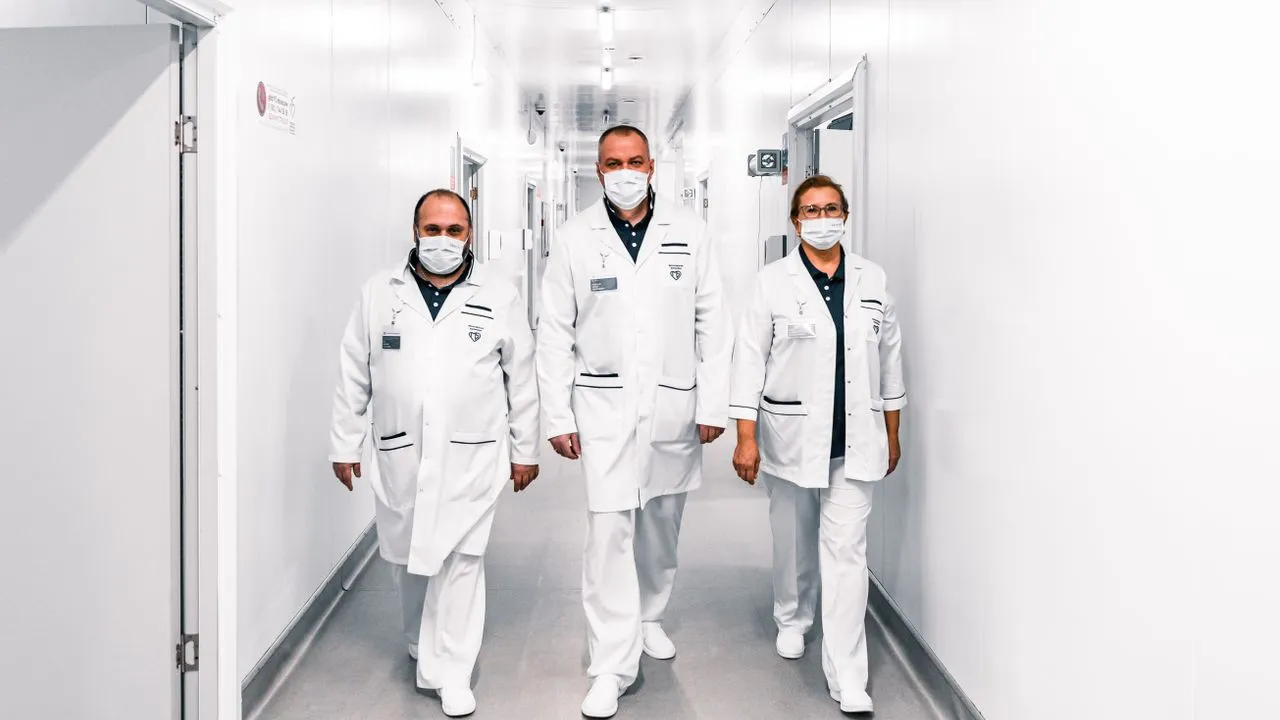
Picture a project lead who wants to win a public tender. The review panel knows the submitted documents, but it does not yet know the people behind them. On the website, in the presentation, in the interview, it meets those people for the first time. A consistent, confident presentation of the entire team involved acts there like quiet proof of organization and diligence. Anyone who presents their team this clearly, the subconscious reasoning goes, probably works in a structured way too.
The opposite plants doubt. A mismatched presentation, one engineer neatly photographed, the next captured in a dark phone snapshot, the third not shown at all. It may have nothing to do with professional quality. But the client reads it as a sign anyway. And in a business where trust is the foundation of everything, you can hardly afford doubts like that.
The Group Photo Ages Faster Than the Shell of the Building
Many firms solve the image question with a single heroic effort. Once a decade a photographer shows up, everyone lines up, the shutter clicks, done. The problem shows up just a few months later. A new structural engineer starts, a graduate joins straight from university, an experienced colleague retires. And suddenly the lineup no longer fits. The new people are either missing entirely or appear with a private photo that clearly comes from a different world than the rest.
In your industry this is especially frustrating, because engineering firms often grow and shrink with their projects. For a large infrastructure project you bring extra specialists on board, and afterwards the size normalizes again. This movement is normal, but it quickly makes any rigid set of images obsolete. No sooner is the group photo on the wall than it no longer matches reality.
A consistent look that also kicks in immediately when you grow solves this dilemma. The engineer who starts on Monday gets a photo that looks like her colleagues', and not only at the next group session three years from now. That keeps your presentation current without having to pull half the workforce out of active projects for a photo session every time.
What I Would Advise You to Do
Take your external image as seriously as you take your structural proofs. Define what a portrait should look like at your firm. Competent, alert, approachable, but never ingratiating. Make sure every new face in the office meets that standard, whether someone has been with you for twenty years or twenty days. The effort involved is small, the effect on your reputation is large.
Because traditional photo shoots often cannot keep up with the rhythm of an engineering firm, it is worth looking at modern, studio-free approaches. There are ways today to turn a simple selfie into a professional portrait in a consistent company style, with no travel and without anyone losing half a day. That way your team looks as considered on the outside as your calculations are on the inside. You stand for precision and reliability. It would be a shame if, of all things, your first impression conveyed the opposite.