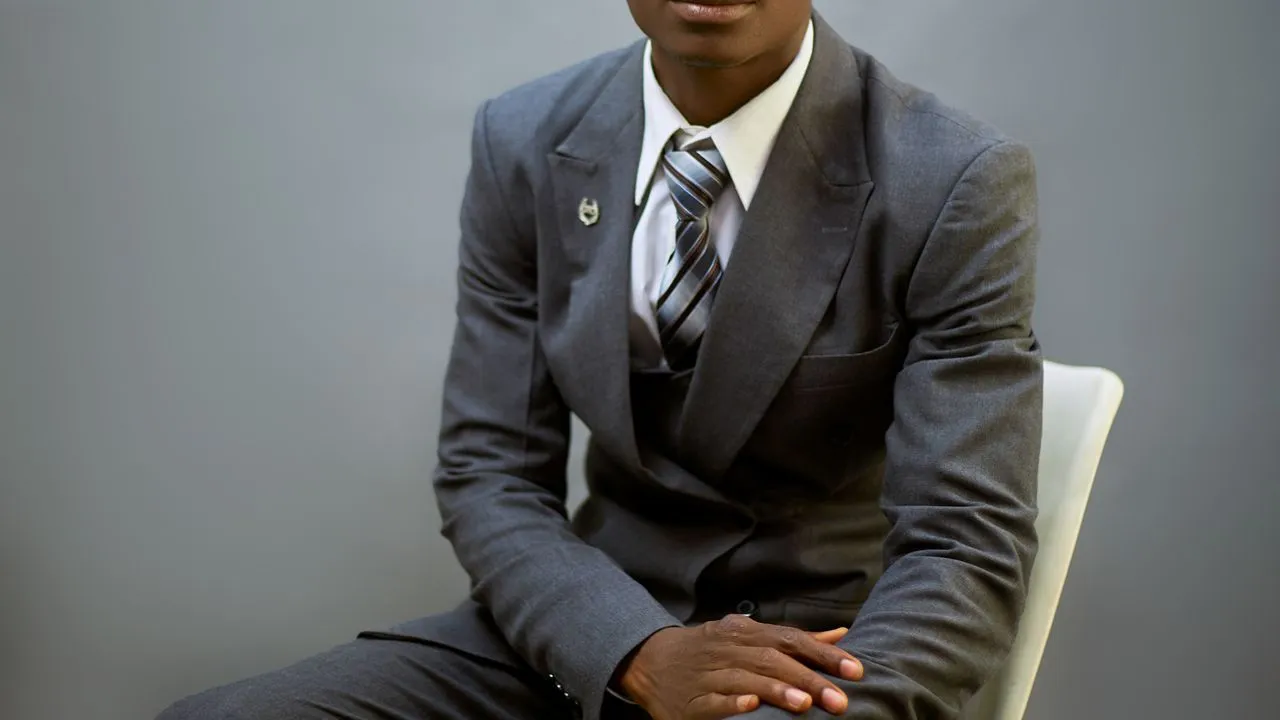
Microsoft Teams Feels Impersonal Without Good Profile Photos
snaptosuit · 2026年8月1日
There is a moment in almost every workday that hardly anyone consciously notices. A meeting starts, the cameras stay off, and a wall of tiles appears on the screen. Instead of faces you see circles. Some show a picture, many just two letters on a colored background. Welcome to the reality of Microsoft Teams as it actually looks in most companies.
Nobody talks about these tiles, and yet you spend a considerable part of your week looking at them. They are the face of your collaboration whenever the real face is not on screen. And when this stand in face consists of nothing but initials, something is missing. Not dramatically, but noticeably. The group feels cooler, more anonymous, a bit like a phone call with strangers.
The camera stays off more often than you would like
In theory, video pictures solve the problem. In practice, the camera stays off surprisingly often. The connection is shaky, the home office is a mess, the day is long, the coffee cup is still half full. There are a thousand good reasons to leave the picture off, and people use every one of them. That is completely normal and will not change.
That is exactly why the profile picture matters so much. It is not the exception, it is the norm. The moment the camera is off, your stored photo takes over the role of your face. If there is a clear, friendly portrait there, you remain a person in the room. If there is only an abbreviation, you become a line in a list. That difference helps decide how personal the whole conversation feels.
And it does not just affect you. It affects everyone. A conference where twelve gray circles float side by side has a different temperature than one where twelve faces are visible. In the first case you talk to tiles. In the second you talk to colleagues. The tone shifts without anyone naming it.
Everywhere your face shows up
Many people underestimate how many places this one photo appears. It is not just the video tile. It sits next to every chat message you write. It shows up in the calendar when you accept a meeting. It appears when someone clicks your name to see your contact details. It follows you through the shared files, the comments, the small status notes off to the side.
A single picture therefore does an enormous amount of work in the background. It is your constant presence in a tool you use for hours every day. And if that picture is a blurry selfie from the car, or nothing at all, then across all these channels you send the same quiet message. Namely, that the whole thing is not taken all that seriously. It is rarely meant that way. It just comes across that way.
It gets especially delicate in shared meetings with clients or partners. They see exactly the same tiles you do internally. A client who joins a group and spots nothing but gray circles gains no impression of confidence. They see a company that has not bothered with how it appears. And the first impression in a video call is just as stubborn as it is in a real room.
The effort is smaller than the effect
The astonishing thing about this topic is the ratio of effort to impact. A good profile picture is stored once and then works for you for years. It costs no ongoing effort, no daily decision, no preparation before every call. It simply sits there and makes you a little more approachable at every opportunity.
Even so, this one step gets left undone by many. Not out of laziness, but because it is never asked for. Nobody requests a picture at the start, so nobody uploads one. Yet it would be one of the cheapest investments in a team's impact there is. If you want your internal communication to feel warmer and more professional, the stored photo is the lever with the best ratio of effort to result.
A good time to tackle it is with every new hire. Anyone starting fresh is setting everything up new anyway. The photo simply belongs to that, as naturally as the password. And for everyone else, a friendly nudge combined with leadership setting the example is enough.
What a good tile picture has to deliver
A picture that works in a small round tile follows different rules than a large portrait. It is tiny. That is why the face matters above all. The head should fill the circle well, the gaze should meet the camera, the light should show the face clearly. A wide crop with plenty of surroundings disappears at this size into a mush of colors from which nothing can be made out.
Beyond that, a certain consistency across the team helps. When all the portraits have a calm, similar character, the wall of tiles looks cohesive rather than fragmented. That is the difference between a team that belongs together and a collection of individual pictures that happened to land in the same window.
If you need clean, cohesive pictures for your whole team and would rather not organize an elaborate photo shoot, there are now modern, studio free ways to do it. They deliver surprisingly good results from simple source photos and take away exactly the hurdle that so often trips this up.