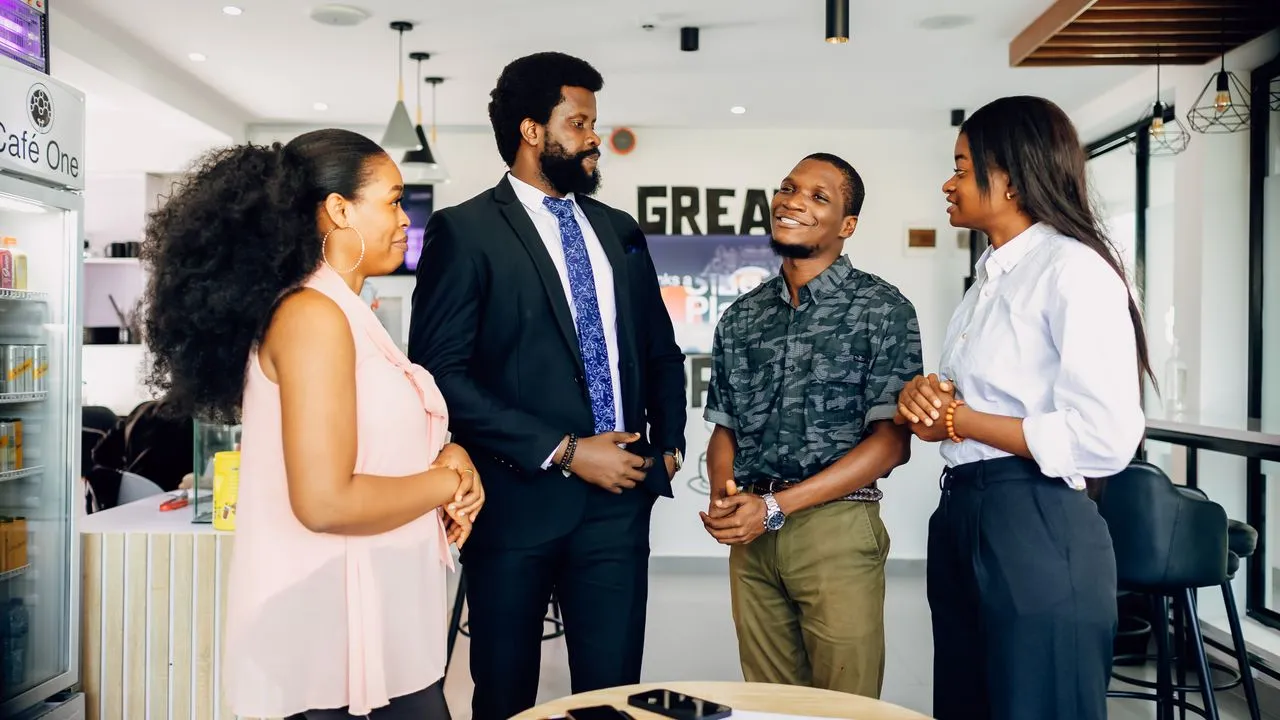
Employer Branding Needs Fewer Clichés and More Real Faces
snaptosuit · 2026年7月10日

There's one sentence that appears on what feels like every other careers page. "Here, people come first." It sounds warm, it sounds right, and it says precisely nothing. Because if people really came first, why does the same page show only a stock photo of four smiling models shaking hands in a loft?
Candidates went numb to this language long ago. They read "dynamic environment," "flat hierarchies," and "we're like a family," and their brains filter it out like a banner ad. What sticks are images. And that's exactly where most companies throw away their most credible chance to come across as honest.
Clichés all read the same
Sit down one afternoon and read twenty job ads from your industry back to back. You'll notice they're interchangeable. The same adjectives, the same promises, the same tone. Cover up the logos and you can barely tell which text belongs to which company.
That's the real problem. Not that the copy is bad. But that it's generic. A candidate applying to you wants to know what it's actually like at your company, not what it could be like anywhere. Words alone barely manage that anymore, because every company uses the same building blocks.
Here's the turn. In that very moment, when all the words sound the same, the visual becomes the deciding difference. A face can't be generic. It belongs to exactly one person, and that person either works for you or doesn't.
A face says what no text can
Picture two careers pages side by side. One shows a bought image of a team that never existed. The other shows your real people, the ones you'll actually meet later in the interview. Which one feels more credible? The question answers itself.
A real photo conveys things no block of prose can pull off. Whether the mood is relaxed or formal. Whether it's mostly young people here or a mixed team. Whether someone's smile looks genuine or rehearsed. The viewer reads all of that in fractions of a second, without consciously noticing.
And it goes further. Showing your team makes a statement about you. It says: we have nothing to hide. That's a signal of confidence you can't replace with any clever wording, however smart. A company that shows its faces feels tangible. A company hiding behind symbolic imagery feels distant, even if that was never the intention.
Why stock photos actively hurt you
You might think a bought image is at least neutral. It isn't. It hurts, and actively so. Because experienced candidates spot stock photos instantly. That too-perfect light, that unnaturally diverse group, that pose no one in a real office ever strikes. The moment someone recognises a symbolic image, a small crack appears in their trust.
The thought behind it is simple and merciless. If they're already faking the photo, what about the rest of the promises? You meant to show competence and instead you planted a doubt. That's a steep price for an image that was only meant to fill a gap.
It gets especially painful when the same stock photo also turns up at a competitor. That happens more often than you'd think. Suddenly your company is advertising with the exact same smiling face as the rival two streets over. It's about as embarrassing as a corporate image can get.
Real doesn't mean unprofessional
This is where a lot of people push back. Real photos, they say, often look like a phone camera in the conference room. Too dark, a crooked background, everyone in a different style. And that's true. An authentic photo still shouldn't be sloppy. There's a big difference between honest and unkempt.
The answer isn't to flee back to the stock photo. The answer is to make your real people look good. Consistent light, a calm background, a style that holds together across every portrait. It isn't about transforming anyone, but about showing them at their best while still keeping them recognisable.
And this is exactly where things are shifting right now. It used to be that professional consistency meant an expensive studio and a long session, no way around it. Today there are studio-free ways to turn existing shots into clean, coherent portraits, without every employee giving up half a day. That pulls the ground out from under the old excuse. Real and professional no longer rule each other out, and that fundamentally changes the maths for your employer branding.