Your Company Website Is Only As Strong As Your Team Photos
2 Juli 2026

Trust forms in fractions of a second. That's faster than anyone reads a single sentence. Visitors scroll, skim, and arrive at a feeling before they've consciously noticed anything. And that feeling often hangs on the one thing nobody put in the brief: the photos of the people behind the business.
Here's a real example. A consulting firm commissions a new website. Clean design, solid colors, considered copy. Then the team page loads with eight photos, each from a different universe. One is clearly a ski trip shot, snow visible in the background. The next is dark and grainy, lifted from a video call. Only one looks genuinely professional, because that colleague happened to sit for a portrait two years ago. The site cost five figures. The impression cracks at a single thumbnail.
The brain remembers the pattern, not the individual photo
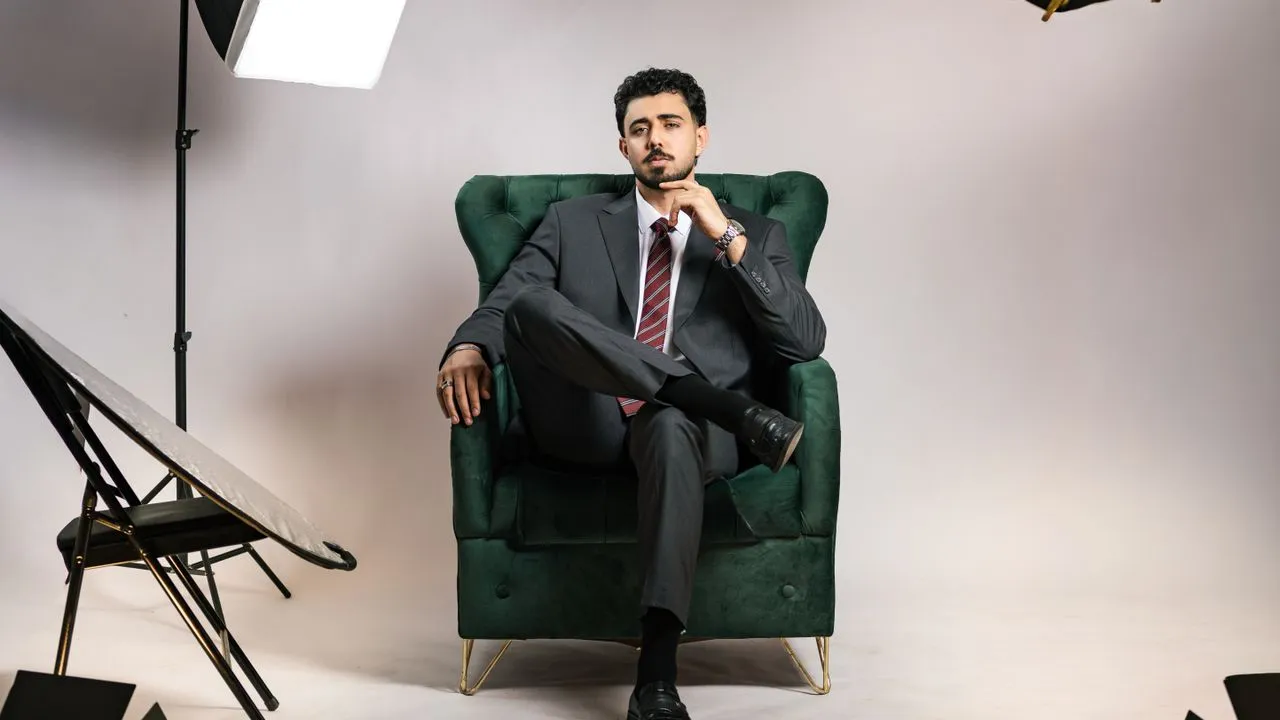
Our minds look for order. When eight portraits share the same rhythm, similar lighting and consistent framing, they read as a team that belongs together. When each image pulls in a different direction, there's friction. Not the kind anyone can name, but it's there. And friction reads as carelessness. Carelessness doesn't sell anything.
Here's the counterintuitive part: the individuals are rarely the problem. Capable people, likeable faces. It's only side by side that things fall apart. A website isn't a photo album. It's a performance, and it doesn't show eight individuals. It shows one organisation.
Why design alone won't save you
Many companies invest heavily in layout and assume the photos will disappear into a polished whole. The opposite is true. The cleaner the design, the more sharply any mismatched image stands out. A refined layout is like an empty stage: every scuff shows twice as clearly.
There's also the simple physics of how eyes move. Faces pull attention automatically, more than any headline placed beside them. Right where most of the looking happens, the professional impression either holds or falls apart.
Why smaller teams feel this more acutely
Large corporations have photo editors and dedicated budgets. Smaller firms collect whatever's available. Someone sends their LinkedIn photo, someone else submits a phone snapshot from last summer, and the newest hire hasn't got one yet. The patchwork wall builds itself. Nobody planned it, and yet it represents you.
Speed makes it worse. A new person starts, the photo is missing, and the next studio booking is weeks away. So something is grabbed quickly. Over months, those stopgap solutions stack up into a presence nobody actually wanted.
A selfie can be the foundation, not the fallback
That's exactly the gap snaptosuit addresses. A simple selfie becomes a portrait in your brand's consistent style, no appointment, no half-day out of the office. Choose the clothing style, background and look, upload the photo, and the result is ready in minutes. One credit produces one portrait. Need it in 4K? Add one more credit.
New starters don't have to wait. Through a tokenised invitation link, each person uploads their own selfie directly. There's also a general link if several people are joining at once, and bulk creation handles whole teams in one go. To keep every future photo consistent, save your look as a brand preset. That way, the twelfth person joining in year three still looks like part of the same team.
A coherent look costs less than a single studio day
Run the numbers. A team of twelve can refresh all their photos comfortably within the Starter plan: 25 credits per month for CHF 29. Companies that onboard people regularly will find the Team plan works better, 100 credits per month for CHF 99. For occasional larger needs, credit packs are available separately, 50 credits for CHF 59. No photographer to book, no three rounds of calendar-wrangling to get everyone in the same room on the same day.
Photos are stored on Swiss servers and are only removed when you actively delete them. A portrait is biometric data, not decoration. Knowing that your people's faces stay where you put them is part of the professional picture, every bit as much as the image quality itself.
A website is ultimately a promise. It says: this is how we work, this is how seriously we take ourselves. When the faces keep that promise, the whole presence holds. When they don't, nobody notices consciously. But everyone has already felt it, three seconds in.